Are you planning to build your dream home soon? Do you want a foundation that lasts for generations? Are you confused about which cement grade to pick? Then JK OPC Cement is a strong choice. It gives superior strength, durability, and stability. But you must check a few things before you buy. Look at the manufacturing date, quality marks, and technical specs. This guide walks you through every important check before you purchase JK OPC Cement for your dream home.
Why Is JK OPC Cement Ideal for Home Construction?
A home must handle heavy loads, harsh weather, and damp air over the years. Choosing JK OPC Cement gives your home strong compressive strength and durability from day one.
Unlike blended types, pure JK OPC Cement sets faster. It also gains high load-bearing strength early. This fast setting has clear benefits:
- Fewer delays: Work on site moves ahead without long waits.
- Faster shuttering removal: You can strip the moulds sooner.
- Lasting strength: Pillars, beams, slabs, and foundations stay durable.
What Grade of JK OPC Cement Do You Need?
Pick the right grade for your job before you buy. The most popular choice for heavy structural work is 53 Grade. It gives maximum compressive strength for load-bearing structures.
| Cement Grade | Initial Setting Time | Final Setting Time | Best Use Cases |
| 33 Grade | 30 minutes minimum | 600 minutes maximum | Plastering, general masonry, low-load masonry work |
| 43 Grade | 30 minutes minimum | 600 minutes maximum | Brickwork, plastering, non-structural concrete paths |
| 53 Grade | 30 minutes minimum | 600 minutes maximum | RCC slabs, pillars, beams, bridge piers, foundations |
Match the grade to the task. Heavy work needs a higher grade. Light work can use a lower one. For most home builds, JK OPC Cement 53 Grade suits slabs, columns, and foundations well.
What Details Must You Verify on JK OPC Cement Bags?
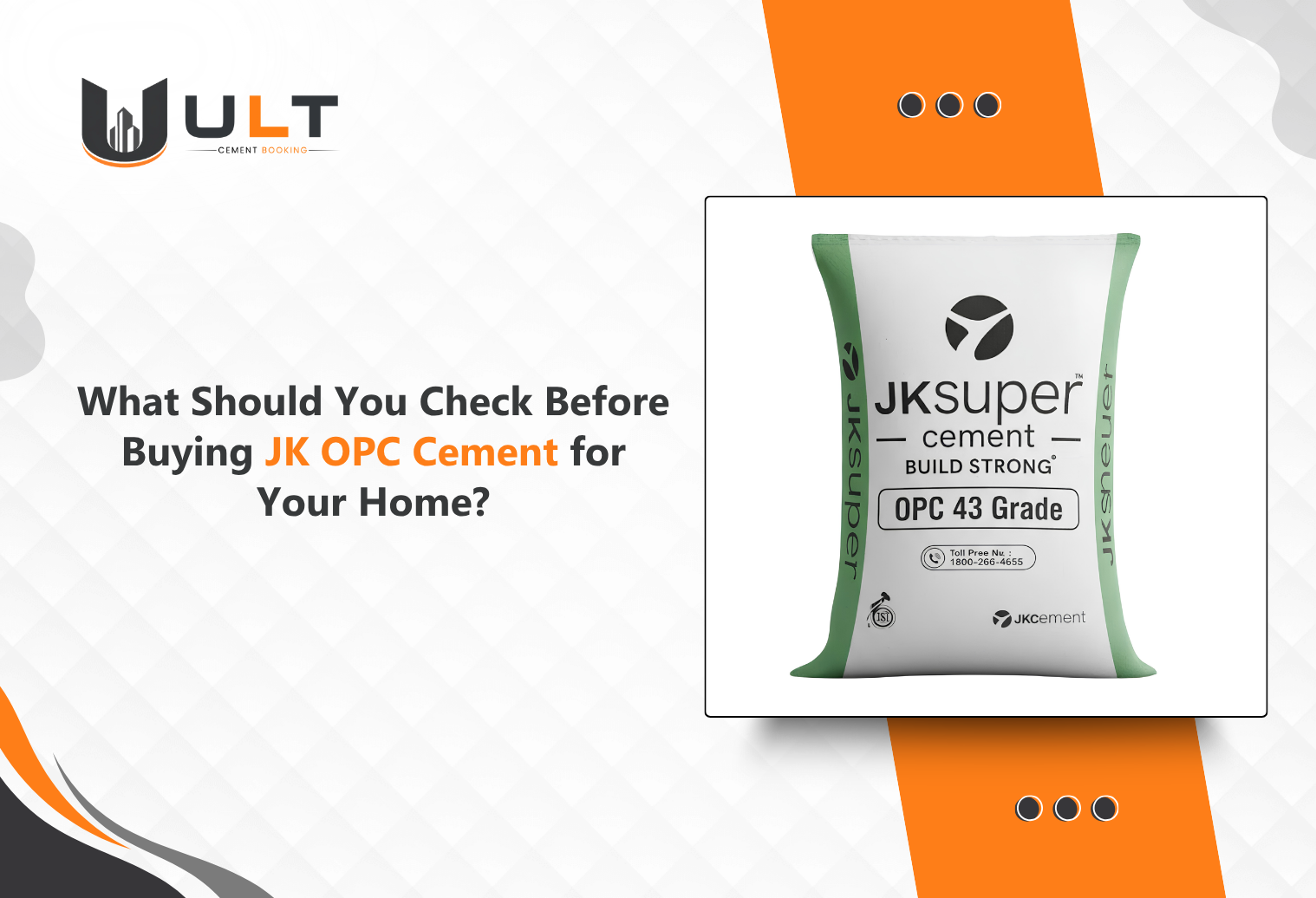
Check every bag before it enters your site. This stops fake or weak material from reaching your project. Genuine JK OPC Cement bags carry strict quality markings.
Always look for these details:
- ISI Certification Mark: Look for the official IS 12269 stamp on 53 Grade bags.
- Net Weight Standard: Each sack should be exactly 50 kg upon arrival.
- Date of Manufacturing: Look at the week, month, and year of manufacturing on the sack.
- Packaging with Tamper Evidence: The stitching is free from any tearing or re-stitching.
Quality is of great significance when purchasing anything. It is true for building supplies. Brands like ULT Cement Booking provide some of the best cement qualities for homes.
How Does the Age of JK OPC Cement Affect Its Strength?
Cement starts absorbing moisture from the air right after packing. This slowly weakens its bonding strength. Fresh JK OPC Cement gives the best bonding and durability on site.
Never buy or use cement older than 90 days without testing it first.
| Storage Age of Cement | Expected Strength Loss | Usage Recommendation |
| Fresh (Under 30 Days) | 0% Loss | Ideal for critical RCC slabs, columns, and foundations |
| 30 to 60 Days Old | 10% to 15% Loss | Safe for general concrete work and brick masonry |
| 60 to 90 Days Old | 20% to 30% Loss | Use only for non-structural plastering or flooring base |
| Beyond 90 Days | Over 40% Loss | Requires laboratory strength testing before any site use |
Ask the dealer for the newest stock. Check the printed date yourself. Do not rely on words alone.
What Simple On-Site Tests Verify JK OPC Cement Quality?
You do not need an engineering lab for first checks. You can test your JK OPC Cement right at the delivery spot with basic field tests.
Try these simple tests:
- Color Uniformity Test: Open the bag and look for a uniform greenish-grey color.
- Hand Touch Test: Put your hand into the bag. The cement should feel cool.
- Smoothness Test: Rub a small pinch between your fingers. It must feel silky, with no grit.
- Lump-Free Inspection: Make sure there are no hard lumps caused by moisture.
- Water Float Test: Drop a small handful into a bucket of clean water. Pure cement floats briefly before sinking.
These tests take only a few minutes. Run them on every batch of JK OPC Cement you receive. They can save you from a costly mistake.
What Are the Best Storage Practices for JK OPC Cement?
Poor storage on site can ruin good material before work even starts. Storing JK OPC Cement the right way protects its strength in rain or humid weather.
Follow these proven tips:
- Keep Off the Ground: Stack bags on raised wooden planks, 15 to 20 cm above the floor.
- Maintain Wall Distance: Keep stacks at least 60 cm away from outer walls to block damp.
- Cover With Waterproof Sheets: Wrap the stacks fully with thick plastic tarpaulins.
- Limit Stack Height: Never stack more than 10 bags high. Bottom bags can harden into lumps.
Use older bags first. Keep newer bags at the back. This simple habit reduces waste.
Final Thoughts
Buying genuine JK OPC Cement is one of the best investments for your home’s foundation. Verify the manufacturing date. Inspect the ISI certification. Check the bag packaging. Store the material properly. These steps protect your building from future structural failures. Always run simple field tests on delivery. This ensures strength, safety, and long-term durability for your family’s dream home.
Ready to build a stronger, safer home? Consult an authorized dealer today and order fresh, verified JK OPC Cement for your next construction project
To stay updated on the best quality cements, follow us now on Instagram, Facebook, Twitter, and LinkedIn. For any query, you can also connect with us on WhatsApp directly.
Frequently Asked Questions
1. What is the setting time of JK OPC Cement 53 Grade?
Fresh cement of this grade has a minimum initial setting time of 30 minutes. The maximum final setting time is 600 minutes.
2. How do I identify genuine JK OPC Cement bags on site?
Check for the official ISI mark, the IS 12269 code, and the maker’s logo. Confirm the net weight of 50 kg. Look for a clear week-month-year manufacturing stamp.
3. What is the difference between OPC and PPC cement?
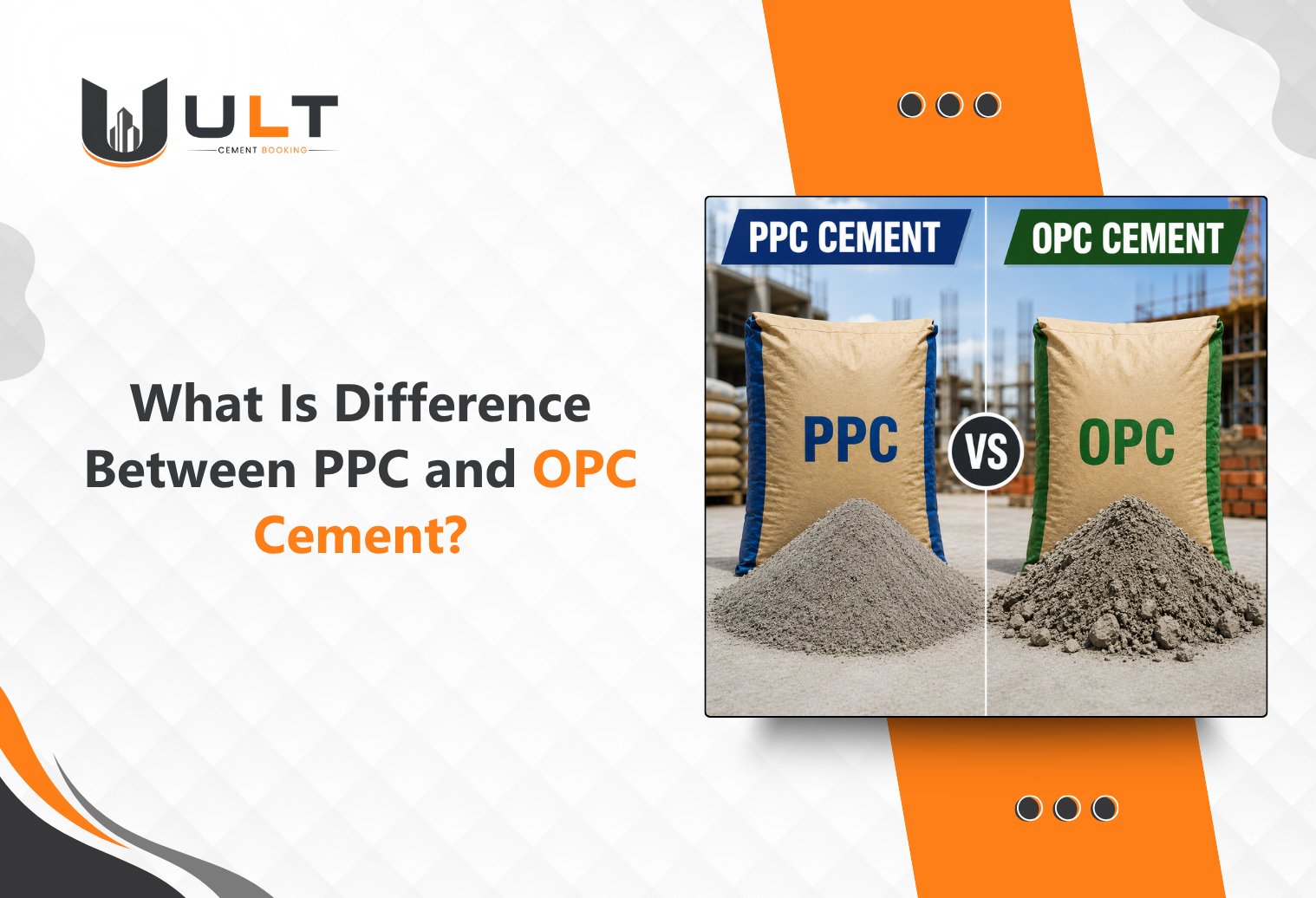
OPC gains load-bearing strength faster. It suits heavy concrete structures. PPC contains fly ash and gives off less heat during hydration. It suits general plastering work.
4. Can I use JK OPC Cement for plastering work?
Yes, you can. Lower grades like 33 or 43 are often preferred for plastering. They help reduce surface micro-cracks.
5. How many cement bags are needed for a 1000 sq ft roof slab?
A standard 1000 sq ft RCC roof slab generally needs around 350 to 400 bags. The exact number depends on slab thickness and mix ratio.